

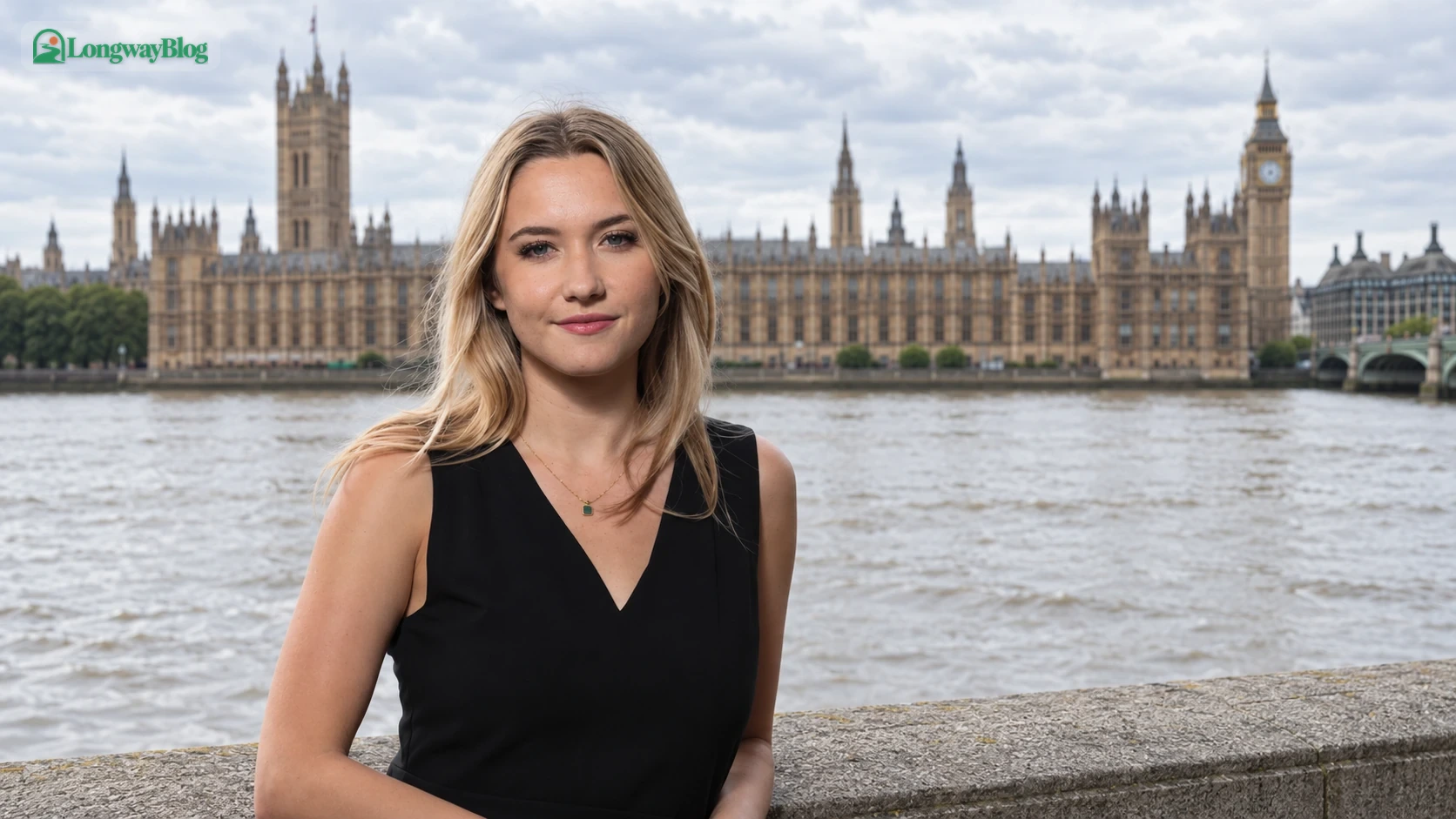
**Poppy Coburn is a British journalist, editor and political commentator best known for her work at The Daily Telegraph.** As of October 2026, she is identified as the newspaper’s Associate Comment Editor, a presenter at Invert and a co-host of The Weekend T podcast.
A University of Cambridge graduate, Coburn previously worked at UnHerd and GB News before developing her career in conservative political journalism. Her writing covers British politics, environmental activism, political institutions and cultural debates.
One distinctive aspect of her public background is her earlier involvement in left-wing student politics. Her published work traces a change in her political outlook, from supporting socialist policies and environmental campaigning to writing critically about aspects of contemporary activism.
Key takeaways
- Current career: Coburn is identified as Associate Comment Editor at The Daily Telegraph in her 2026 Battle of Ideas biography.
- Education: She graduated from the University of Cambridge with a BA (Hons) in History and Politics, according to the Claremont Institute.
- Previous employment: Her professional background includes editorial work at UnHerd and television production at GB News.
- Political development: Her earlier writing included support for Labour’s socialist direction, while a 2021 essay explained her departure from environmental activism.
- Notable publication: In August 2025, the UK Commission for Countering Extremism published her independently commissioned essay examining Extinction Rebellion, freedom of expression and extremism.
Poppy Coburn profile summary
| Field | Details |
|---|---|
| Name | Poppy Coburn |
| Profession | Journalist, editor and political commentator |
| Known for | Political commentary and editorial work at The Daily Telegraph |
| Current reported position | Associate Comment Editor, as of October 2026 |
| University | University of Cambridge |
| Qualification | BA (Hons) in History and Politics |
| Previous work | UnHerd and GB News |
| Other editorial experience | The Conservative Reader |
| Fellowship | Claremont Institute Publius Fellow, 2024 |
| Broadcasting | The Weekend T, Invert and political discussion programmes |
Education and early political involvement
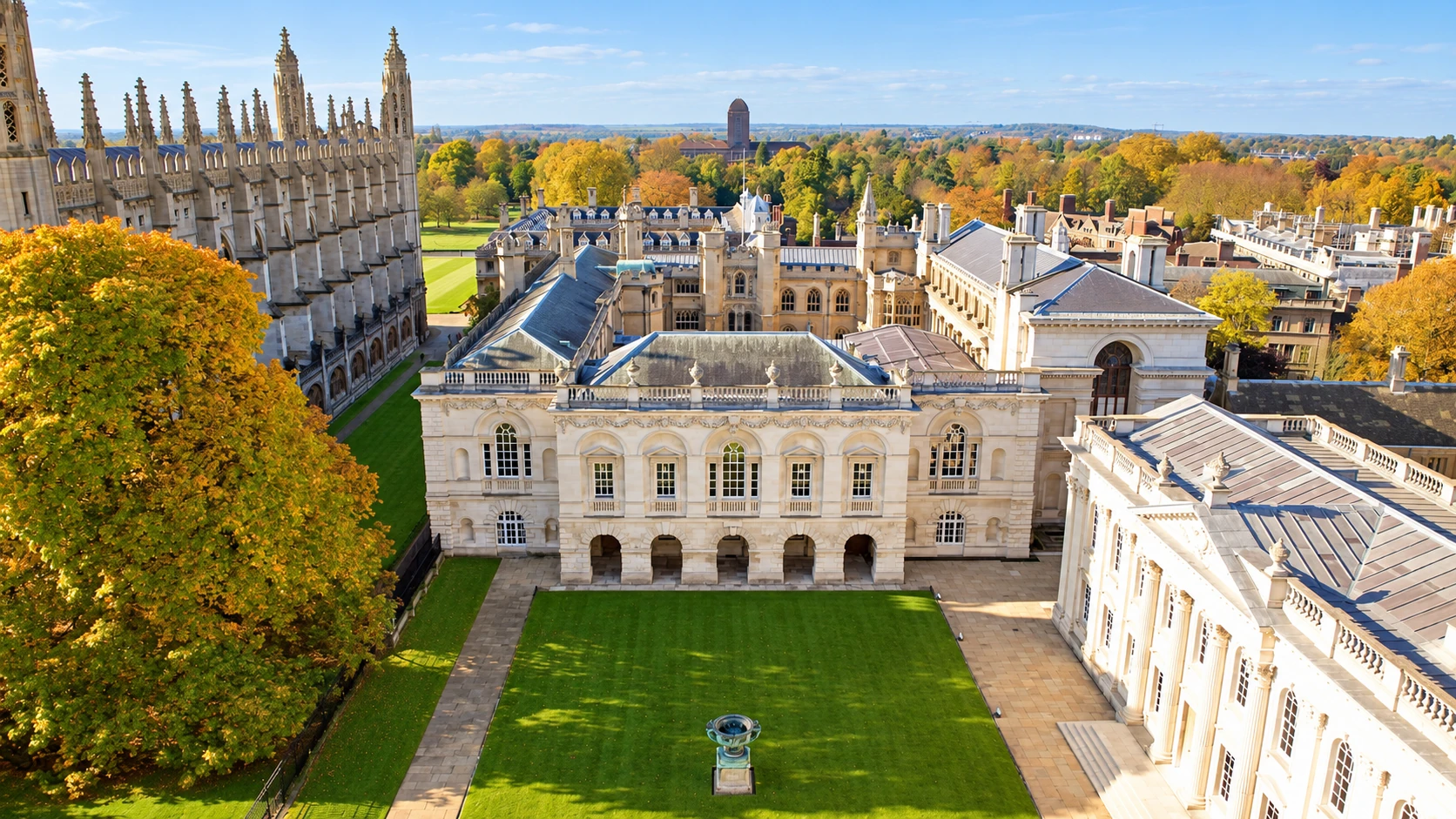
Coburn studied History and Politics at the University of Cambridge. Her 2024 Claremont Institute fellowship biography confirms her degree and identifies the political philosopher Thomas Hobbes as one of her academic interests.
Her involvement in public debate began during her university years.
In March 2019, a Cambridge student identified in contemporary records as Poppy Cockburn won an election to the University’s Council. Her campaign addressed issues including fossil-fuel divestment and student representation.
The Cambridge University Reporter subsequently recorded her council membership beginning on 1 July 2019.
There is a spelling difference between the surname Cockburn used in those records and Coburn used in her later journalism career. The Claremont Institute identifies Poppy Coburn as a former Cambridge University Council member, connecting the professional biography with the earlier position, although the published records do not explain the name variation.
Her earlier political writing
An article published in Cambridge student newspaper Varsity on 17 January 2020 provides an example of Coburn’s political views during this period.
Co-written with Reuben O’Connell Booth, the piece argued against Labour abandoning its socialist principles following the party’s defeat in the 2019 general election.
The article matters because it documents a political position that differs from the conservative commentary for which Coburn subsequently became known.
It also places her involvement in student politics within a wider interest in national political arguments. Her early work addressed the direction of the Labour Party rather than concentrating exclusively on university affairs.
The article establishes what she and her co-author argued at the time. It does not establish when every aspect of her later political outlook developed.
From environmental activism to political journalism
One of the clearest accounts of Coburn’s changing political outlook appeared in September 2021.
Writing for UnHerd, she published an essay titled Why I gave up on Extinction Rebellion.
In the article, Coburn described her experiences with environmental campaigning at Cambridge and her growing dissatisfaction with elements of the activist movement.
Her account included a protest associated with the 2019 Oxford–Cambridge Boat Race. Reflecting on her eventual decision, she wrote:
> “So I left eco-activism for good.”
The essay offers a personal explanation of her departure from environmental activism. It should be understood as Coburn’s account of those experiences rather than independent confirmation of every incident or motivation she describes.
Her decision to write publicly about that change became relevant to her later journalism because environmental activism, protest tactics and the boundaries of political expression remained recurring subjects in her work.
Early media experience
By September 2021, Coburn was working as an editorial trainee at UnHerd.
The publication is known for political commentary and essays addressing questions across ideological and cultural divides. Coburn’s work there placed her within professional opinion journalism while she was developing her public writing career.
She subsequently worked as a producer for GB News, including on primetime programming.
Her Claremont Institute biography confirms this broadcasting experience, although it does not establish precise employment dates.
Television production and editorial writing involve different responsibilities. Her documented experience across both helps explain why her later career includes newspaper work alongside radio and podcast appearances.
Career at The Telegraph and The Conservative Reader
Coburn was publicly identified as an Assistant Comment Editor at The Daily Telegraph by October 2023.
Her title is recorded in the historical Battle of Ideas festival programme.
A later 2026 biography identifies her as Associate Comment Editor. The precise date of that title change is not established by the available institutional records.
Her work at the newspaper forms the central part of her current professional identity.
The Telegraph’s comment section publishes opinion and political analysis, including arguments about government policy, public institutions and contemporary culture.
Coburn’s involvement in this area is consistent with the subjects that appear throughout her published writing.
Editorial work at The Conservative Reader
Alongside her newspaper career, Coburn held a documented editorial position at The Conservative Reader.
On 3 July 2023, the publication announced a new series of original articles and named Coburn as its editor, with David Cowan serving as deputy editor.
The series launched with an essay by Conservative politician Michael Gove.
This appointment is a useful marker in Coburn’s career because it records responsibility for an editorial project, rather than simply another individual article.
In October 2023, she also published an essay titled What is the point of community?
The piece addressed community, social relationships and reciprocal obligations, reflecting her interest in the social and philosophical questions underlying political arguments.
The editorial appointment and her own writing illustrate two sides of her professional work: helping develop a publication’s commentary and contributing arguments under her own name.
Claremont Institute fellowship
In 2024, Coburn was named a Publius Fellow at the Claremont Institute.
The American institution publishes work concerned with political philosophy, constitutional government and public affairs.
Its fellowship biography supplies several of the clearest details about her educational background and earlier employment.
The fellowship also provides a documented connection between Coburn’s British journalism career and a US institution associated with conservative political thought.
It should not be confused with an academic degree or a permanent university appointment.
Political views and major writing
Coburn’s published commentary has addressed a range of subjects, but political institutions, activism and the relationship between individuals and society appear repeatedly.
Her public writing also provides a chronology of changing political arguments.
The 2020 Varsity article supported maintaining Labour’s socialist direction.
Her 2021 UnHerd essay described why she had become disillusioned with environmental activism.
By 2023, her writing for The Conservative Reader was engaging directly with themes of community and conservative political thought.
These publications demonstrate a change in her publicly expressed positions. They do not, by themselves, explain all the personal or intellectual reasons behind it.
Her 2025 essay on Extinction Rebellion
A substantial example of Coburn’s later work appeared on 18 August 2025, when the UK Commission for Countering Extremism published her essay:
“Act now, because it’s too late”: climate extremism and the lessons of Extinction Rebellion.
The official GOV.UK publication identifies Coburn as the author of the 12-page paper.
The essay formed part of a series commissioned by Robin Simcox, the former Commissioner for Countering Extremism, to examine questions surrounding freedom of expression.
Using Extinction Rebellion as its central example, Coburn considered the difficulties of balancing free speech, protest rights, public order and counter-extremism.
The paper examines how environmental movements can combine urgent political messaging with disruptive direct action. It also considers the challenge facing policymakers when groups retain public sympathy while engaging in protests that interfere with ordinary activities.
These are complicated distinctions.
Peaceful political advocacy, disruptive protest and extremism are not interchangeable concepts. Debates about restrictions on protest therefore involve competing concerns about civil liberties, public safety and the lawful expression of political disagreement.
Coburn’s essay contributes an argument to that discussion rather than establishing an official definition or legal conclusion.
The Commission expressly stated that the essays were independently commissioned and that the authors’ views did not necessarily reflect government policy.
This qualification matters: publication on GOV.UK does not mean the British government adopted or endorsed Coburn’s conclusions.
The essay is nevertheless an important part of her professional record.
It develops a subject she had previously discussed through personal experience into a longer examination of political ideas and public policy.
Commentary on disability and chronic illness
Coburn also attracted criticism following the publication of a Telegraph opinion article titled How having a disability became cool on 5 September 2026.
The article discussed chronic illness, disability identity and social-media culture, including the term “sickfluencers”.
Its framing was challenged by several writers covering disability and chronic illness.
On 16 September, Emma Cieslik published a response in Ms. Magazine addressing medical sexism and the experiences of disabled women.
Julia Doubleday also challenged the article’s treatment of chronic illness and Long COVID in commentary republished by The Sick Times on 21 September.
The Disabled Journalists Association published further criticism on 24 September, arguing that Coburn’s approach risked reinforcing harmful assumptions about disabled people.
These responses establish that the column became the subject of public disagreement.
They do not mean that every factual or medical assertion made by Coburn or her critics can be accepted without separate supporting evidence.
The episode illustrates the contested nature of some of her cultural commentary, particularly where political arguments intersect with personal health and disability.
Broadcasting, podcasts and current work in 2026
Coburn’s public career extends beyond written journalism.
During 2026, she appeared on established political discussion programmes and participated in podcasts covering British current affairs.
On 24 April 2026, she appeared on BBC Radio 4’s Any Questions?, a programme in which politicians and commentators respond to questions from members of the public.
She also participated in LBC’s Cross Question in July 2026.
These appearances reflect her role as a political commentator invited to discuss events alongside politicians and other media figures.
The Weekend T and Invert
Coburn is associated with The Weekend T, a Telegraph podcast discussing major news stories and political developments.
An episode published on 17 October 2026 featured Coburn alongside Michael Deacon discussing contemporary political stories.
Earlier that month, she joined Camilla Tominey and Tim Stanley for a Telegraph programme examining the priorities of younger Conservative voters.
The discussion, published on 5 October, explored questions surrounding economic expectations and the party’s relationship with younger supporters.
Her current professional biography also identifies her as a presenter at Invert.
Invert’s organisational material links her with Joanna Marchong on the programme Unprepared.
Together, these roles show how Coburn’s work spans newspaper commentary and recorded political discussion.
Her latest documented appearances
Coburn continued participating in public political debate in October 2026.
On 20 October, Spiked published a podcast episode featuring her participation in a live discussion recorded at the Battle of Ideas festival.
The programme addressed contemporary British political developments and wider cultural arguments.
As of 24 October 2026, the Battle of Ideas professional biography identifies her as Associate Comment Editor at The Daily Telegraph, a presenter at Invert and a co-host of The Weekend T.
Her published work offers a clear picture of her professional development: early involvement in student politics, a documented change in her political commentary, editorial roles in British journalism and later contributions to national debates.
The 2025 climate-extremism essay is particularly revealing because it connects a subject Coburn first addressed through her own experience with the policy questions she subsequently examined in published analysis.
By October 2026, that combination of political writing, editing and broadcasting defines her public career.
More from longwayblog.co.uk.
